



MemberGrowth

Membership Growth for Credit Unions

You Have Members. Do You Have Membership?

Credit unions were membership businesses long before membership became one of the most important growth models in business. But having members and deliberately managing the member relationship are two different things.

I help credit-union leadership teams strengthen the full member journey, from acquisition and account opening through onboarding, engagement, primacy, retention, referral, and relationship growth.

Matt Epstein

Matt Epstein

AUTHOR ยท MASTERING MEMBERSHIP

Why Credit Unions

Credit unions already have what most membership businesses are trying to build.

But having a member on the books is not the same as having a deep, durable member relationship.

CREDIT UNIONS ALREADY HAVE

  • 01 Trust
  • 02 Community
  • 03 Loyalty
  • 04 A mission centered on improving members' financial lives

Member count tells you who walked in the door. Member depth tells you whether the relationship is actually working.

A Different Starting Point

I'm not a traditional credit union consultant. That's the point.

Credit unions operate within regulatory, capital, governance, and field-of-membership constraints, and plenty of growth tactics from other industries do not translate.

The operating discipline does.

THE TRANSFERABLE QUESTIONS

  1. 01 How do you onboard members?
  2. 02 Which behaviors predict a deeper relationship?
  3. 03 Who owns the member journey end to end?
  4. 04 What are the leading indicators that matter?
  5. 05 Where does the relationship stall?
  6. 06 How quickly does the organization learn and improve?

My goal is not to turn a credit union into Amazon, SiriusXM, or Walmart+. It is to adapt the membership-growth disciplines that survive contact with the realities of a credit union.

Two decades building and scaling membership businesses at Amazon, SiriusXM, and Walmart+.

The Core Problem

Member depth, not just member count.

A new account is easy to count and easy to celebrate. The harder question is whether that person moves toward a deeper, more durable relationship or simply sits on the books.

  1. 01

    Acquisition

  2. 02

    First transaction

  3. 03

    Second action

    THE HINGE
  4. 04

    Habit

  5. 05

    Primary relationship

The second action often changes everything.

Questions We Help Answer

Where is member growth actually getting stuck?

If these are hard to answer quickly, that is usually where the work starts.

  1. 01 Which members are we trying hardest to acquire and retain?
  2. 02 What is the second action that predicts a deeper relationship?
  3. 03 Where do members fall out in the first 30 to 90 days?
  4. 04 Which behaviors predict primacy and long-term value?
  5. 05 Who owns those outcomes across lending, marketing, digital, branches, service, and product?
  6. 06 Which inputs predict next quarter's results before the lagging metrics show up?

Membership Growth

Membership Growth is an operating system, not a retention tactic.

Member growth connects acquisition, lending, account opening, onboarding, digital adoption, product depth, service, primacy, attrition, referral, and relationship expansion. These should not be treated as unrelated departmental problems. They are one connected member journey.

The Membership Flywheel™

Nine stages. One system. Translated for credit unions.

The formal stage names stay the same across every industry. Select a stage to see the question behind it, and what it looks like inside a credit union.

THE PROMISE

DEMAND CHANNELS

THE GATE

THE LOOP THAT KEEPS PEOPLE

THE PROMISE

Value Proposition & Benefits

Who is this for, and what outcome makes joining feel obvious?

Define the core benefits and the emotional hook that turns a nice-to-have into a must-have.

IN A CREDIT UNION

Better rates and lower fees get attention. The harder question is what makes a member stay when another institution is ten basis points better.

When these stages work together, you don't just grow; you accelerate. Small improvements compound across the system. Better onboarding increases engagement. Higher engagement improves retention. Strong retention expands margin. Margin funds better benefits and better service. That lifts conversion quality, and the flywheel spins faster.

Stage by Stage, in a Credit Union

01

Value Proposition & Benefits

Better rates and lower fees get attention. The harder question is what makes a member stay when another institution is ten basis points better.

02

Pricing & Acquisition Offers

Here the price shows up as rates, fees, dividends, promotional rates, account bonuses, and incentives. The question remains: what behavior is the offer designed to produce?

03

Membership Marketing

Do not stop measuring at funded accounts. Measure whether the member becomes active, engaged, and valuable over time.

04

Partnerships & Distribution

Dealers, fintech lending partners, SEGs, CUSOs. Who owns the member relationship once the loan funds?

05

Sign-Up Flow

Account opening and abandonment. Who owns the experience end to end?

06

Onboarding & First 30 Days

For credit unions, the frame expands to the first 30 to 90 days. Behavior design, not just welcome communications. This is where a borrower either becomes a member or does not.

07

Engagement & Member Success

Direct deposit, debit primacy, digital adoption, relationship depth, and the service moments that either build trust or spend it.

08

Renewals & Churn Prevention

Credit-union churn often looks like dormancy, attrition, or loss of primacy. The account stays open while the paycheck, deposits, or transactions leave.

09

Winback, Referrals, & Monetization

Reactivation, referrals, and relationship expansion. Referral can be a significant acquisition channel and one of the hardest to attribute.

Break one stage and the whole system stalls. Fix one and you strengthen the ones on either side of it.

Signature Credit Union Work

One keynote. Two flagship workshops. One system.

Built for credit union leaders responsible for growth, marketing, digital, lending, member experience, strategy, and operations, and for League events designed to bring those functions together.

SIGNATURE KEYNOTE

You Have Members. Do You Have Membership?

What modern membership businesses can teach credit unions about building deeper member relationships.

A different way to think about credit union growth. Instead of treating acquisition, product adoption, engagement, service, and retention as separate activities owned by separate departments, participants learn to see them as one connected system, and to find where their own system is leaking.

Invite Matt to Speak

KEY THEMES

  • Acquiring a member is the beginning of the work, not the end
  • Building a value proposition younger consumers can actually repeat
  • Turning a first transaction into an ongoing relationship
  • Designing onboarding around behavior rather than communication
  • Identifying the actions that predict deeper, longer-lasting relationships
  • Focusing on leading inputs rather than lagging outputs
FLAGSHIP WORKSHOP

From Loan to Relationship

The second action changes everything.

Many credit unions acquire members through auto loans, dealers, and fintech lending partnerships, then watch the relationship go quiet once autopay is established.

I have run structurally similar problems before:

  • SiriusXM Converting car-dealer trial subscribers into active digital relationships.
  • Amazon Moving a Prime member from one benefit into others, such as Music or Grocery.
  • Walmart+ Moving shoppers into deeper digital and membership relationships.

Different businesses, same underlying problem: someone came in for one thing. Does the relationship ever become a second thing?

THE SEQUENCE

AcquisitionFirst transactionSecond actionHabitPrimary relationship

PARTICIPANTS LEAVE WITH

  • A definition of the critical second action
  • A map of the first 90 days
  • The behaviors that signal relationship depth
Discuss a Workshop

FLAGSHIP WORKSHOP

Build Your Membership Flywheel

Find the leaks hiding in your member journey.

A working session, not a lecture. Teams map their own experience across all nine stages, mark where members stall, where handoffs break, and where no one clearly owns the outcome.

Discuss a Workshop

PARTICIPANTS LEAVE WITH

  • The three to five highest-priority member-growth leaks
  • Ranked opportunities
  • Clear owners
  • The leading metrics that matter

Additional Executive Sessions

Two more ways in. Same system.

01

AI and Member Growth

More personal, not just more automated.

AI gives a credit union capabilities that until recently required a large technology organization. It also generates a great deal of busywork that looks like progress. The question is not where can we use AI. It is where AI makes the member relationship measurably better.

PARTICIPANTS LEAVE WITH

Two or three member problems worth piloting, and a framework for separating real impact from AI theater.

02

The Membership Growth Operating System

Turning good ideas into repeatable execution.

Growth stalls when responsibility for the member is spread across six departments and owned by none of them. This session covers what to measure, who owns what, the three or four leading indicators worth obsessing over, the operating cadence, and where vendors and AI actually help.

PARTICIPANTS LEAVE WITH

A framework for the metrics, ownership, and operating rhythm required to run member growth as a system.

Sessions can be adapted for 45 to 60 minute keynotes, 60 to 90 minute interactive sessions, half-day workshops, or executive leadership sessions.

More Topics Worth a Session

Any of these can become its own session, get folded into a working workshop, or start as a shorter discussion with a smaller group.

01 Setting the Habit

What actually gets a relationship to stick in the first 90 days, whether it is a brand-new member or an existing member picking up a new product. The mechanics are the same either way, and most credit unions only design for the first case.

02 The Indirect Borrower Problem, in the Data

Why an auto loan is structurally the same problem as a trial subscription nobody chose, and what your own numbers say about where that relationship goes quiet.

03 Inputs vs. Outputs

What your board report measures today, and the behaviors it is not catching that predict next quarter's numbers before they show up.

04 Proving Value

Building an annual member value statement members would actually read, rather than one that gets filed away unopened.

05 Who Owns Membership

Structure, single-threaded ownership, and what happens when the member journey is everyone's job and no one's.

06 Merger Member Migration

Treating a merger as a second onboarding, not a data migration project. The member experience of a merger is a Flywheel problem, not an IT problem.

07 Pricing When the Price Is the Rate

What offers and promotions mean when you cannot discount the way a retailer can, and what actually moves a member instead.

08 The Renewal Memo

A one-page ritual for deciding, deliberately and on a schedule, who you are trying to keep and why, instead of finding out through attrition.

09 From Member to Primary Financial Relationship

What deposit primacy actually is, what predicts it, and how to build toward it deliberately instead of hoping it happens.

10 What Should the Board Measure?

A short list of leading indicators a board can track quarter to quarter, distinct from the lagging financials they already see.

How I Help Credit Unions

From alignment to operating system.

Speaking can stand on its own. It can also be the first step in something longer. Four stages, each one building on the last, each with a clear answer to what you walk away with.

01

Educate

A keynote, executive session, or working workshop.

WHAT YOU WALK AWAY WITH

  • A shared vocabulary for the member journey
  • Cross-functional alignment on where growth is leaking
  • An initial list of opportunities worth investigating
02

Member Growth Audit

A structured evaluation of the current member journey.

WHAT YOU WALK AWAY WITH

  • A current-state map of the member journey
  • A review of member data and behaviors
  • The three to five highest-priority growth leaks, ranked
  • An explicit list of what not to spend money on
03

Member Growth Roadmap

The audit sequenced into an operating plan.

WHAT YOU WALK AWAY WITH

  • A 3, 6, 9, and 12 month roadmap
  • An owner for each priority
  • The leading metrics that show whether it is working
  • A prioritized list of experiments to run
04

Member Growth Partner

Ongoing executive advisory.

WHAT YOU WALK AWAY WITH

  • A living scorecard
  • A regular operating cadence
  • Experiment reviews
  • Vendor accountability
  • Support for your executive team and board

Identification, not execution.

I do not replace your team and I do not replace your vendors. I help your team identify where growth is leaking, determine why, prioritize what matters most, and build the metrics, ownership, and operating rhythm to fix it.

Why Matt

Built inside membership businesses at scale.

This thinking was developed inside some of the world's largest membership businesses and translated here for the realities of credit unions. Across two decades at Amazon, SiriusXM, and Walmart+, the same question kept showing up in different forms: someone came in for one thing, and the relationship depended on whether they ever did a second thing.

Matt is a Partner and Growth & Go-to-Market leader at LF Partners, founder of Member Growth, and author of Mastering Membership.

More about Matt →

Amazon

Prime member growth, Prime Music, Prime Day, and the expansion of Prime Now and Amazon Fresh.

SiriusXM

Built and scaled the standalone streaming business, and operated the challenge of turning car-originated subscribers into deeper digital relationships.

Walmart+

Led member experience, engagement, and retention.

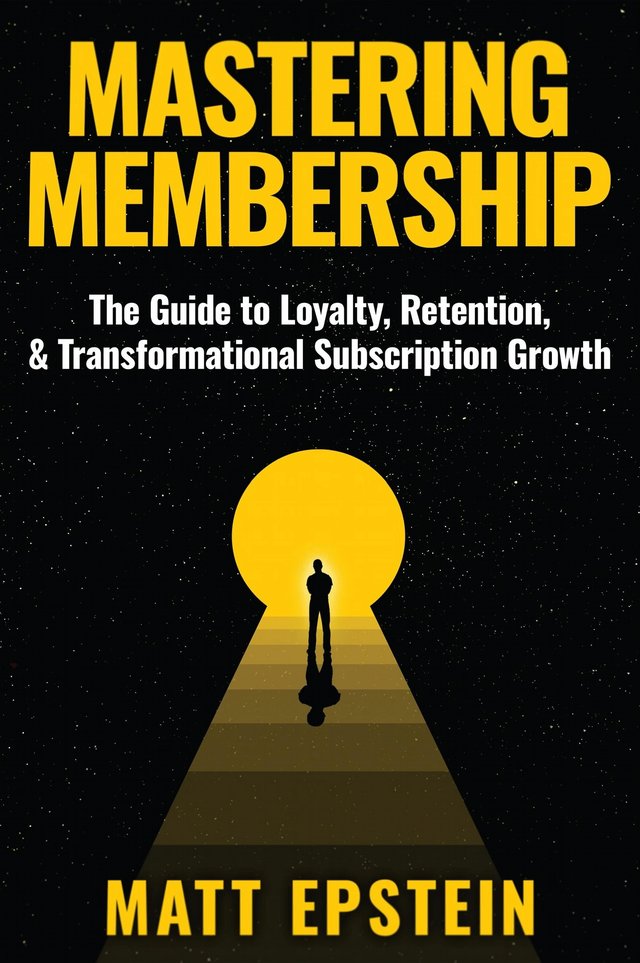
Mastering Membership book cover

The Book

Mastering Membership

THE GUIDE TO LOYALTY, RETENTION, & TRANSFORMATIONAL SUBSCRIPTION GROWTH

Reached #1 in Customer Relations on Amazon

The book is built around the same system used on this page: the value proposition, acquisition, onboarding, engagement, retention, operating metrics, ownership, and accountability behind durable member relationships.

Let's Talk

Membership isn't a campaign. It's a system.

Bring this to your credit union, League, or leadership team.